Tuesday, August 13, 2013

Tibetan Mastiff


The Tibetan Mastiffs is an impressive dog,  large in stature with a solemn watchful look. This breed is a guardian and highly independent. The Tibetan Mastiffs originated in 1100 BC China high in the Himalayan Mountains . Tibetan Mastiffs were used mainly to protect property and family of the migrant farmers. This breed is still considered a primitive breed with slow maturation and females having only one estrus  per year. It was in the early 1900’s that Tibetan Mastiffs became recognized by the Kennel  Club.
Very independent and intelligent, Tibetan Mastiffs history of working closely with humans have given them an uncanny human understanding.
Tibetan Mastiffs have the following unique traits:
1. Females have a single estrus
2. Tibetan Mastiffs are not always willing to please their owners.
3. Tibetan Mastiffs can be extremely determined to get their own way.
4. Tibetan Mastiffs are very cat-like in their behavior.
5. Before buying a Tibetan Mastiff, you should consider that a Tibetan Mastiff needs a large fenced yard, may be very vocal at night, requires socialization with other animals and people, and may act very stubbornly. (reference: http://www.tibetanmastiff.org/is-tm-right-for-you.html)


Additional resources:http://www.tibetanmastiff.org/
Do you own a Giant Breed dog? We sell the only REAL waterproof dog bed, hose tested and easy to clean for your large or giant breed dog. www.dogcheapsleeps.com

Dog Cheap Sleeps' spokesdog Honey

Thursday, August 8, 2013

Why do dogs sniff other dogs butts?


Socially dogs may have strange behaviors compared to humans but for dogs, these behaviors make perfect sense! Thirty three percent of a dog’s brain is designed to process smells. Dogs have a keen sense of smell and are useful to human for sniffing out everything from smuggled drugs to diseases. Human being only use 5 percent of the brain to process smells by comparison.

When a dog sniffs the rear end of another dog, his sense of smell meets the other dog’s anal glands, which produce strong smells and give clues about all sorts of things to other dogs. Besides, they can't shake hands! Smelling each other is a socially accepted practice among dogs. Sniffing is calming, even for dogs who already know each other they will sniff each other every time they meet.

Here are a couple more links for more in-depth information on this fascinating subject!


Brought to you by the only REAL waterproof dog bed, www.dogcheapsleeps.com!

Wednesday, July 31, 2013

What can I do about my dog's fear of loud noises and thunderstorms?


The fact is most dogs have a fear of something. Many fear loud noises regardless of if they have trauma related to noise or not. It’s always a good idea to try to lessen the fears of your dog or they will most likely get worse.

The two most common responses dogs have to the anxiety caused by fear of noise are to run away or some form of destructive behavior (chewing, digging, etc).  These behaviors can be modified by introducing a mild form of the noise and giving your dog a really special treat when he becomes afraid. The treat will act to counter the fear and soon your dog will expect to receive the special treat when he hears a storm approaching. This is due to a basic psychological effect known as operant conditioning. You can try this on your own or seek out a professional animal trainer/behaviorist.

We’ve provided some links below to more resources on this subject. As always, if your dog displays extreme behaviors please consult a veterinarian.


From the makers of the only REAL hose tested waterproof dog bed, www.dogcheapsleeps.com!
Do you own a Giant Breed dog? We can help with a custom made dog bed that's easy to clean and your big dog will love.
 

Tuesday, July 9, 2013

Scottish Deerhound


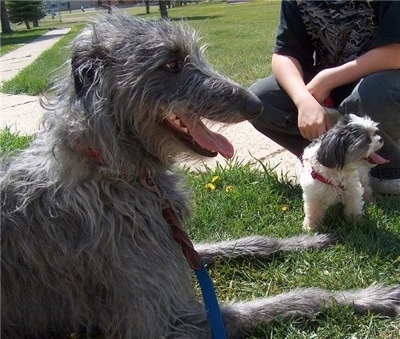
The Scottish Deerhound resembles a larger thicker coated Greyhound. He got his name centuries ago by being the best at pursuit and killing of deer in Scottland. There were exclusive ownership rules in place and no one lower than an earl could own a Scottish Deerhound. This lead to breed extinction in the early 1800s.

Weighing between 75-100 pounds, this dog can be intimidating to small children. The Scottish Deerhound may also chase furry animals and will need to be fenced in order to prevent him running off. His coat is easy to care for and he requires only brushing and bathing.

Resource link: http://www.akc.org/breeds/scottish_deerhound/index.cfm

Friday, June 28, 2013

Why do dogs bury bones?


Photo credit - www.diamondsintheruff.com
 
Dogs bury bones for a variety of reasons. Instinct is probably the main reason dogs bury bones and other food. Dogs of the past had to hunt for food and often buried leftover for future meals. If your dog is burying his food or bones/treats, he is probably telling you he has more than enough to eat.
Sometimes only the bones were leftover. Dogs would keep them, buried, nearby incase the hunting became sparse. They would dig up the bones and extract the nutrient rich marrow.

Fast forward to today’s dog, his instincts tell him to bury his excess food and bones.  This is a game for today’s dog and will provide endless hours of fun and play for you dog. Give him some soft dirt and a few toys or bones and he will do the rest!

Brought to you by the makers of the last dog bed you’ll ever need to buy – www.dogcheapsleeps.com


Resource links: